Water leaks can cause costly damage in minutes. This guide highlights top home water leak detectors that provide fast alerts, reliable sensors, and smart features. From battery-powered, wire-free units to app-connected systems with auto shutoff, these picks cover a range of home layouts and budgets. Below, you’ll find a quick overview table, followed by in-depth product sections to help you compare performance, setup, and use-case fit.
| Product | Brand | Key Benefit |
|---|---|---|
| X-Sense Wi-Fi Water Leak Detector Kit | X-Sense | App alerts, 4 sensors + base station for remote monitoring |
| METAK | Dual-probe drip and flood detection in multiple rooms | |
| STECHRO | IP66 waterproof design, simple placement, loud alerts | |
| Govee | 2 rear + 1 front probe design with adjustable alarm | |
| YoLink | Real-time leak detection with auto shutoff and LoRa range |
X-Sense Wi-Fi Water Leak Detector Kit

The X-Sense kit combines four water-sensor probes with a base station to deliver real-time alerts via a smartphone app. It’s designed to detect leaks around basements, kitchens, and laundry areas. A red LED on the detector plus a loud base station alert helps when you’re nearby, with notifications pushed to your phone for off-site monitoring. The system relies on a Wi‑Fi connection (2.4 GHz) to sync data and alerts, and it supports app-based history review and device management.
METAK 5 Pack Water Leak Detectors (WD60)
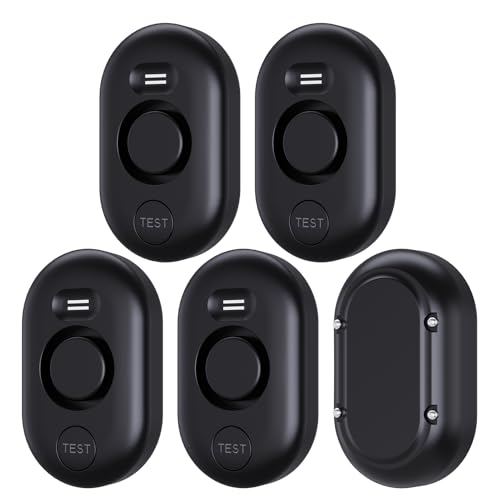
METAK’s WD60 kit emphasizes coverage with dual-probe drip and bottom flood detection. The package notes a Wi-Fi/Bluetooth limitation and compatibility considerations within METAK’s ecosystem, making it ideal for users who prioritize placement flexibility across kitchens, bathrooms, basements, and laundry areas. The devices are compact, easy to place, and designed to provide early warnings to minimize water damage from pipe leaks, drips, and floor flooding.
STECHRO 4 Levels Adjustable Alarm Leak Detector

STECHRO’s leak detector emphasizes multi-level alert capability and IP66-rated waterproof durability for humid areas. It’s designed for flexible placement throughout the home and is marketed as a non-Wi‑Fi option, relying on simple placement to provide audible and visual alerts when leaks or drips are detected. The unit is suitable for kitchens, bathrooms, basements, and utility spaces where high humidity or water presence is possible.
Govee Water Leak Detectors 5 Pack

Govee’s set includes multiple detectors with back probes plus an additional front-probe for drip detection. It features an adjustable 0–100 dB alarm, enabling you to tailor loudness to the environment. The system is wireless and easy to deploy, with optional compatibility through a gateway for smartphone monitoring. It is well-suited for rapid deployment in kitchens, bathrooms, basements, and laundry areas where leaks might occur behind appliances or under sinks.
YoLink FlowSmart All-in-One Smart Water Meter

YoLink’s FlowSmart is an all-in-one water meter with an integrated shutoff valve designed for robust leak detection and control. It is NSF certified and supports real-time leak detection with automated shutoff, which helps prevent water damage in potable-water applications. The system operates with a LoRa-based ecosystem, offering long-range communication and offline resilience, making it suitable for whole-home protection and scenarios where internet access is limited or unreliable.
Buying Guide: Key Purchase Considerations And Comparisons
When selecting a water leak detector, consider the following factors to ensure you get the right fit for your home:
- Detection coverage: Probes per unit and placement flexibility determine how thoroughly you can monitor areas like under sinks, near appliances, basements, and laundry spaces.
- Connectivity: Decide between Wi‑Fi, app-based ecosystems, or standalone devices. Wi‑Fi connected models enable remote monitoring, while non-Wi‑Fi options rely on local alerts and gateways.
- Alerts and alerts latency: Look for audible alarms (dB level), LED indicators, and mobile push notifications. Some systems offer historical alerts and test modes for verification.
- Power and maintenance: Battery life, wall adapters, and ease of replacement affect long-term upkeep. Consider devices that support simple battery exchange and low-power operation.
- Auto shutoff capabilities: For comprehensive protection, units paired with shutoff valves (like YoLink FlowSmart) provide immediate action to stop ongoing leaks and minimize damage.
- Integration with other smart devices: App compatibility and cross-brand support can simplify automation, especially in newer smart homes with Tuya, SmartThings, or other ecosystems.
- Durability and environment: IP ratings (such as IP66) indicate resistance to moisture and dust, which is important for basements or laundry areas.
- Ease of setup: Wireless placement, clear indicators, and simple mounting options reduce installation effort and improve user experience.
- Future expansion: If you plan to scale, choose systems that support adding more sensors or integrating with a wider ecosystem for centralized monitoring.
Across the selections, pros tend to favor systems that combine reliable multi-probe detection with real-time alerts and, where possible, auto shutoff. In smaller homes or apartments, battery-powered, wire-free detectors with app notifications can be an excellent fit. For larger homes or basements, gateways and base stations with multiple sensors help deliver comprehensive coverage and remote monitoring capabilities. Always verify compatibility with your existing router and smart-home platforms before purchasing.
Note: This guide does not include pricing and avoids personal opinions. It focuses on objective features and practical usage to help you pick a detector that matches your risk areas, living situation, and preferred level of automation.